Over 100 golf balls on the market — are you playing the right one? Find your match free in about a minute, using real physics. Independent and unbiased.
Best Made. Best Matched. Picture your tee shot flying just as you want it, your wedge stopping on command — a single ball, engineered from the best materials, the best design, the best technology, and now proven to fit the way you actually play. Not chosen on a hunch. Solved from real flight physics. You'll sleep better at night knowing you're playing the right golf ball.
Hover / tap the ball — see the physics
What golfers are saying
Reviews from the range.
Beyond the Fitting Studio
More than a launch monitor can tell you.
A launch monitor doesn't sort through 103 golf balls to hand you the one engineered to your unique swing. In fact, a launch monitor tells you what you've done — it doesn't predict what you should do. Especially with golf balls.
01
Every ball — not a sleeve of six
In a studio you might test five or six balls before your hands give out. Here, all 103 models from 25 manufacturers are scored against your swing on every single fitting — weighted the way a master fitter weights them, with zero bias toward whatever the shop stocks.
02
Physics no launch monitor session gives you
Each recommendation is flown through a true ballistic model. Backspin from your delivery sets the spin ratio S = ωr/v, which drives the Magnus lift coefficient; drag rises with spin; and both are dimpled-ball coefficients — dimpled drag runs roughly half a smooth sphere's (Cd ≈ 0.22 vs ≈ 0.5) because the dimples trip the boundary layer turbulent and delay separation. Air density comes from the barometric pressure and temperature of your course. Every recommended ball is flown through this model; the fit itself is judged the way a master fitter judges it. A studio fits you in its air. We fit you in yours.
03
50 years of fitting — on demand, free
Decades of TrackMan sessions and thousands of fittings, distilled into an engine that answers in about a minute — anywhere on earth, in 11 languages, with a printable report. No appointment. No mat. No sales pitch.
The Fitting
Four questions. Your ball.
A launch monitor measures one ball you just hit. Our Physics Optimizer does more. You work the sliders — ball launch velocity, launch angle, reverse spin, temperature, altitude — and it runs all 103 balls through real Magnus-and-drag aerodynamics. What comes back isn't a reading. It's a real engineering calculation: your golf ball, engineered to your swing.
These are presented from your swing speed. If you have launch monitor numbers, drag any bar to override — then just confirm what you change.
Ball launch speed150mph
Ball launch angle12°
Reverse (back) spin2600 rpm
Your environment
Your shot — at impact
The Golf Ball Fitter — Official Ball Fitting ReportDAVID BUTLER "DR. GRIP" · PROFESSIONAL MASTER CLUBFITTER · THEGOLFBALLFITTER.COM
01
How fast is your driver swing?
This is how fast you swing your driver. Move the slider to adjust the ball speed and driver carry distance shown below.
90MPH
55 · Beginner75 · Average95 · Strong115+ · Tour
Driver Flight · Live
How often do you flush your driver?
Ball speed and carry estimates use a smash factor of 1.48 — set by your "flush" answer above. Actual numbers vary with strike quality and equipment.
Tee height (driver) Choose one!
Angle of attack with driver Choose one!
02
What matters most to you?
Pick the category that sounds like your game. This weights the fitting toward what you actually want from a ball.
What is your preferred category Choose one!
03
Around the greens
How do you want your chips and wedge shots to behave when they land?
Desired greenside performance Choose one!
Feel at impact Choose one!
04
Flight & cover
Last two. What trajectory do you like to see, and do you have a cover preference?
Preferred ball flight Choose one!
Cover material Choose one!
The fitting engine couldn't be reached. Check your connection and press "Doctor Grip Recommends!" again.
Your Official Ball Fitting
Your one best-fit ball from the Doctor Grip Golf Ball Physics Optimizer — with the physics of why it was chosen for your swing, and its full predicted flight.
—
Swing Speed · MPH
—
Ball Speed · MPH
—
Compression Window
Est. driver carry — sea level · 70°F
Best Fit
—
—
Why we chose it for you
The physics of this choice
Your Driver Flight
Fitting Inputs
The Doctor Grip Golf Fitting Network
More free and professional fitting tools by David Butler — DoctorGripGolf.com
DoctorGripGolf.com — The network hub: every fitting studio, one front door. DOCTORGRIPGOLF.COM
AI Golf Club Builder — A tour-level full-bag fitting: every head, shaft, grip and ball, with a build sheet, carry card and shop work order. AIGOLFCLUBBUILDER.COM
The Ultimate Driver — A complete digital driver fitting. THE-ULTIMATE-DRIVER.COM
The Driver Fitting Studio — A 5-step guided driver console with animated flight chart and full-color report. THEDRIVERFITTINGSTUDIO.COM
Wedge Fitting Studio — Scoring-club precision: wedge lofts, gapping and carry engineered to your swing. WEDGEFITTINGSTUDIO.COM
Master Golf Fitter — The luxury fitting experience, club by club. MASTERGOLFFITTER.COM
The Golf Ball Fitter — This free ball fitting. Share it with your foursome. THEGOLFBALLFITTER.COM
The Physics
Spin is a three-axis problem.
"Foundational for launching missiles and golf balls alike." A golf ball rotates around three axes at once — and every ball in the catalog behaves differently on each of them. That's what the fitting engine analyzes.
Off the driver, back spin (rotation about the X axis) is what keeps the ball in the air — too much and it balloons, too little and it falls out of the sky. Side spin (rotation about the Z axis) is your hook and your slice. And how much of each a ball produces depends on its compression, its cover, and how your swing delivers the club.
That's why the fitting asks about swing speed, strike quality, tee height and attack angle: together they define the spin picture your swing creates — and the engine finds the ball whose construction complements it.
X Axis · Back SpinLift, carry and stopping power — driven by compression and cover
Z Axis · Side SpinCurvature — a lower-spin ball straightens the miss
Y Axis · Roll AxisThe line of flight the other two axes tilt around
The Catalog
Is your ball in here? It's been analyzed.
Every one of these 103 models across 25 manufacturers — from seven countries — has been profiled for compression, spin, flight, feel and cover, and every fitting scores all of them. Search for the ball you play today and see where it ranks against your swing. Updated worldwide for 2026 — now including Titleist's Pro V1x Left Dash and Pro V1 Left Dot, plus Maxfli, PXG and Sugar (England). Shopper's note: alignment editions (AIM, Triple Track, 360°) and RCT versions fit identically to their base model.
103 balls · 25 manufacturers
BridgestoneJapan
Tour B XTOUR
Tour B XSTOUR
Tour B RXTOUR
Tour B RXSTOUR
e12 ContactDISTANCE
e6DISTANCE
CallawayUSA
Chrome TourTOUR
Chrome Tour XTOUR
Chrome Tour Triple DiamondTOUR
Chrome SoftPREMIUM
Chrome Soft XTOUR
SupersoftSOFT FEEL
ERC SoftDISTANCE
WarbirdDISTANCE
Supersoft MaxSOFT FEEL
REVASOFT FEEL
CutUSA
BluePREMIUM
GreyALL AROUND
DCTOUR
HonmaJapan
D1DISTANCE
TW-XTOUR
TW-STOUR
D1 Speed MonsterDISTANCE
InesisFrance
Tour 900PREMIUM
Soft 500SOFT FEEL
KascoJapan
KIRA STARDISTANCE
Kirkland SignatureUSA
Performance+PREMIUM
MaxfliUSA
TourTOUR
Tour XTOUR
Tour SPREMIUM
SoftFliSOFT FEEL
StraightFliALL AROUND
MizunoJapan
RB TourTOUR
RB Tour XTOUR
RB 566DISTANCE
RB 566VDISTANCE
OnCoreUSA
ELIXRPREMIUM
VERO X1TOUR
VERO X2TOUR
VERO XP1PREMIUM
Avant 55SOFT FEEL
PinnacleUSA
RushDISTANCE
SoftSOFT FEEL
PreceptJapan
Laddie XDISTANCE
Lady iQ+SOFT FEEL
PXGUSA
Xtreme TourTOUR
Xtreme Tour XTOUR
SaintnineSouth Korea
U-ProPREMIUM
Extreme Soft GoldTOUR
SeedIreland
SD-01 TourTOUR
SD-04PREMIUM
SD-05 The PearlPREMIUM
SnellUSA
Prime 3.0PREMIUM
Prime 4.0TOUR
Get SumDISTANCE
SrixonJapan
Z-StarTOUR
Z-Star XVTOUR
Z-Star DiamondTOUR
Q-Star TourPREMIUM
Q-StarALL AROUND
Soft FeelSOFT FEEL
AD333ALL AROUND
UltiSoftSOFT FEEL
DistanceDISTANCE
SugarEngland
G3PREMIUM
TaylorMadeUSA
TP5TOUR
TP5xTOUR
Tour ResponsePREMIUM
Soft ResponseSOFT FEEL
Distance+DISTANCE
SpeedSoftSOFT FEEL
KaleaSOFT FEEL
TitleistUSA
Pro V1TOUR
Pro V1xTOUR
AVXPREMIUM
Tour SoftALL AROUND
VelocityDISTANCE
TruFeelSOFT FEEL
Pro V1x Left DashTOUR
Pro V1 Left DotTOUR
Top FliteUSA
GamerDISTANCE
XLDISTANCE
ViceGermany
ProTOUR
Pro PlusTOUR
Pro SoftPREMIUM
TourALL AROUND
DriveDISTANCE
Pro AirPREMIUM
VolvikSouth Korea
VividDISTANCE
Vivid XTDISTANCE
S4TOUR
XT SoftSOFT FEEL
S3TOUR
Vivid LiteSOFT FEEL
WilsonUSA
Staff ModelTOUR
Staff Model XTOUR
TriadPREMIUM
Duo SoftSOFT FEEL
Fifty EliteSOFT FEEL
XXIOJapan
PremiumPREMIUM
ElevenDISTANCE
Hyper RDDISTANCE
Rebound Drive IIPREMIUM
No match in the catalog — run the fitting anyway and the engine will tell you what should replace it.
Recognition
Fitting credentials you can verify.
Press features and industry recognition for the fitting methodology behind The Golf Ball Fitter.
Miura Golf · Featured Dealer
Miura's first Featured Dealer in the United States
Japanese forged-iron maker Miura Golf named California Master Clubfitter David Butler its first Featured Dealer — honoring fittings that ran two to five hours, built on TrackMan data, computerized shaft analysis, and tolerances measured like engineering, because they were.
ABC News · Wayne Freedman
The science and patience of true custom fitting
ABC News reported on a fitting process centered on launch-monitor analysis and patient observation of real ball flight — hours, not minutes — producing straighter shots, better smash factor, and more distance than off-the-rack sets.
Jay Stuller · Feature Profile
"Making error-free arrows"
Writer Jay Stuller profiled the Doctor Grip fitting — one that begins over breakfast, reading the golfer before a club is swung, then applies a former Chrysler chief engineer's precision to every shaft, loft and lie.
About Doctor Grip
From gripping clubs to fitting the ball itself.
"With a degree in Mechanical Engineering and over 50 years of experience in golf club design, manufacturing, building and fitting — using TrackMan, physics, aerodynamics and mathematics in my unique fitting process — I built a worldwide fitting business as customers came to me from all over the world. Using AI, I now have the means to implement my technology into worldwide products, and to provide you with the finest fitting processes available for building your set of golf clubs. This is leading-edge technology — the first of its kind."
David Butler"Doctor Grip" · BSME · MBA · Professional Master Clubfitter
The Fitter
David Butler — Professional Master Clubfitter
Fifty years of engineering, precision and fitting — the man and the method behind the brand.
The Founder
How The Golf Ball Fitter was born
From re-gripping clubs at a driving range to building an AI golf-ball optimizer — in his own words.
Rate this fitting
How did we do?
Tap a star, add a word if you like, and send it straight to Doctor Grip. Your feedback shapes the next version.
Sent straight to Doctor Grip — no email app needed.
Something went wrong — please try again.
★
Thank you for your comments — Doctor Grip
Free Golf Ball Fitting — Stop the Guess, Play Your Best
Over 100 golf balls on the market — are you playing the right one? Find your match free in about a minute, using real physics. Independent and unbiased.
Japanese golf club manufacturer Miura Golf, known for making premium forged irons, named California Master Clubfitter David Butler its first Featured Dealer.
Butler, also known as “Doctor Grip,” was featured on the Miura Golf website with photographs of his custom fitting and clubmaking facilities in the San Francisco Bay Area. Miura described this recognition as a way to honor dealers who do an exceptional job representing the product and helping golfers understand the value of custom fitting.
Miura representatives emphasized that Butler not only personified the kind of clubfitter the company wanted associated with its brand, but also showed an unusual level of commitment by focusing entirely on Miura products instead of mixing in off-the-shelf retail offerings.
Butler’s fitting sessions typically lasted between two and five hours. During those sessions, golfers learned how shafts bend, twist, droop, and kick through the swing. For precise fitting, Butler used technologies such as TrackMan and True Temper’s computerized Shaft Lab to analyze swing behavior and build clubs with tight tolerances in shaft selection, length, swing weight, kick point, loft, lie angle, and grip.
Miura highlighted Butler’s engineering background, his history of technical leadership, and his passion for golf as key reasons he was able to create such a disciplined fitting process. The company viewed that combination of engineering, craftsmanship, and commitment to feel as a natural match for the Miura philosophy.
Wayne Freedman’s ABC News piece described a custom fitting experience that was very different from buying golf clubs off a rack or out of a box. Instead of relying on stock assumptions, the fitting process centered on detailed launch monitor analysis and patient observation of ball flight.
Freedman explained that David Butler used a TrackMan launch monitor to study many elements of the golf swing, including shaft and club angles, swing speed, ball speed, spin, descent, and other factors that affect how the ball actually travels. The process took hours, not minutes.
The article went on to describe how Butler built a set of Miura irons that felt balanced and efficient while producing highly impressive TrackMan numbers. Freedman noted especially strong smash factor readings, improved consistency, straighter shots, and additional distance compared with previous sets built using other clubheads.
He also described the trajectory of the irons as ideal: high enough to hold greens, stable enough in windy conditions, and controlled enough to avoid ballooning. Even the longer irons performed with surprising ease and reliability.
The overall point of the story was that true custom fitting is not marketing language. It is a disciplined process of measuring performance, understanding ball flight, and selecting equipment that works with the golfer rather than against the golfer.
An appointment with custom club fitter David Butler begins unlike any other in the world, and that’s a declarative statement without a gram of hyperbole.
After all, Butler is the only fitter with a studio in Princeton by the Sea’s Harbor Mall, a mere long iron from California’s northern coast. His fittings start with a ride in a smartly restored cobalt blue 1956 Ford pickup, which sports a digitized dashboard, satellite radio and growling Hemi under the hood. At the 3-Zero Café hard by the Half Moon Bay airport, the soft-spoken gentleman with rimless glasses and white hair will gently pick your brain about golf, work and life in general; assess your personality to see if you’re a compatible subject; and buy you breakfast.
Eat the entire plate of corn beef hash and eggs, because every calorie will be burned hitting golf balls over the next three hours.
With keen observations and data collected from eight separate computers, the man known as Dr. Grip can then begin to create a set of exquisite Miura irons, the heads of which are forged in Japan’s Himeji City, where master craftsmen once made legendary samurai swords. Each shaft, what Butler calls “the engine of the golf club,” must have the precise length, weight and stiffness for your individual swing, and a flex, kick-point and spine alignment that transfers maximum energy to the club-head. In turn, the shaft and club-head will produce the highest possible “smash factor,” which adds to ball speed and distance, while also producing a launch angle and spin rate that sends shots on a high trajectory, so that balls drop and stop on greens.
These are only a few of the 20 or so factors that go into the custom clubs, says Butler, a former chief engineer at Chrysler in Detroit, who also ran operations at automobile plants in the United Kingdom and Colombia. “What we’re trying to accomplish with the shaft and the head is a three-axis alignment,” he explains, “which is foundational for launching missiles and golf balls alike.” Along with his engineering bent and use of technology, Butler is also a disciple of total quality improvement, and applies a systematic discipline to the club-fitting process.
Indeed, an assembled set is but a first draft. Clients are asked to hit each new club as he takes in a second set of results from a TrackMan launch monitor and a strike board, enabling Butler to make final adjustments to lie angles and lofts, and ensure that the carry between each club is roughly equal. When satisfied that the clubs are pure, only then does Butler allow them out of the studio and onto a course.
“To see people smile when they hit these clubs means everything. It’s my hobby and my passion.”
And it certainly translates to satisfied clients, including executives, professional players and even golfers who work for other club-fitting companies. Says Wayne Freedman, a San Francisco television reporter and Marin County golfer now on his second set of Butler-crafted irons: “Hitting a club made by David is like your first taste of chocolate.”
The Not List
With off-the-shelf clubs you get what you pay for. Many sets feature shafts with mismatched flexes and frequencies, attached to heads manufactured with relatively loose quality tolerances. According to a study sponsored by Golf magazine, 70 percent of core and avid golfers who bought clubs in the past year did not get custom fit. About 20 percent got a cursory fitting with loft and lie angles, and only about ten percent were tested on a launch monitor — three quarters of whom reported playing much better than before.
A session with a master like David Butler will likely cost $250 to $300, and a set of custom-assembled Miura irons with Butler’s private inventory of premium True Temper will cost three to four times more than premium branded clubs. That notwithstanding, a complete and thorough fitting is a much different experience than anything else in golf.
The Magic of Materials
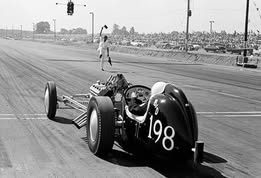
A Midwestern native, David Butler attended The Ohio State University and played football for fabled Coach Woody Hayes. He found his operational and supply-chain work at Chrysler fascinating, and in an eclectic career has also worked on a nuclear reactor, flew airplanes, and crewed a AA Fuel National Drag Racing Champion — all of which explains his interest in engines. “I’ve been making and fixing clubs for more than 50 years,” he explains. “It started with my friends.”
Today he works exclusively with the heads designed and forged by Japan’s Katsuhiro Miura and his sons. Often referred to as having “the hands of God,” Miura makes irons softer than most. “Miura takes out the top layer with the impurities, and uses only the best low-carbon premium steel,” says Butler. Because his dedication to quality is so closely aligned with Miura’s, the Japanese firm named him their first Featured Dealer in the U.S., and Mr. Miura personally presented him with a set of irons engraved with Butler’s signature on each club.
A Fitting Lesson
On the TrackMan studio, Butler compared ball speed, face angle, vertical launch angle, smash factor and more across different shafts, weights and flexes, then across five different Miura heads. The data showed an average smash factor of 1.4, close to the hypothetical best of 1.5. Smash factor is actually more important than club-head speed at impact: one extra mph of club-head speed gives about a yard, but one extra mph of ball speed yields three yards down the fairway.
Butler’s conclusion: clubs with True Temper ultra-light M-80 shafts about a half-inch longer than standard, but still stiff, with a mid-sized grip. If the clubs performed in the real world as they did on the TrackMan, the result would be about 20 to 25 more yards of carry and roll from a well-fitted six iron. A good fitting, then, is also something of a major golf lesson — and when pure shots start heading long, high and straight, Dr. Grip’s passion is once again refueled.
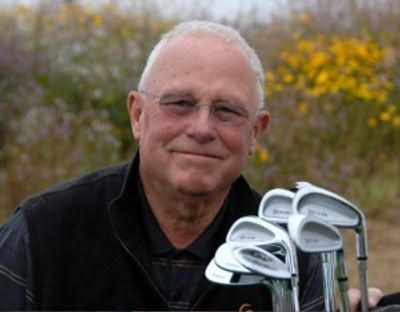
David Butler — “Dr. Grip” — with a set of his Butler Irons
David Butler — “Doctor Grip” — is a Professional Master Clubfitter with roughly 50 years in club repair, design, building and fitting. He met Jack Nicklaus at Ohio State in the 1950s, spent 15 years as a Chief Engineer at Chrysler, contributed to NASA’s Magellan 2 Venus mission, and consulted in Silicon Valley for a quarter century. He is also a national champion in NHRA fuel dragster racing, flies airplanes, and loves dogs. Precision is not a marketing word to him. It’s a habit.
David is a BSME and MBA whose career spans engineering, aerospace, automotive, semiconductor operations, and high-performance competition. That rare combination of technical discipline and competitive insight shapes the philosophy behind this brand.
One question followed him through thousands of club fittings: fitting the clubs is great — but which ball? The industry’s answer was trial and error. His answer was an optimizer, first proven in Excel against published tour launch data, then rebuilt with AI into the engine behind this site — predicting the optimal ball from launch speed, launch angle, temperature and altitude.
That’s how he went from gripping clubs, to designing them, to building them, to fitting them — to fitting the ball itself. This site gives that answer away, free, to any golfer who wants it.
Fitting studios: Shaker Heights, OH · Half Moon Bay, CA · Coventry, England · Bogotá, Colombia.
National Semiconductor — Senior Vice President of Operations, DataChecker Division.
Silicon Valley — 25 years of engineering consulting.
Miura Golf — First Featured Dealer in the United States.
The Golf Ball Fitter — 50 years of fitting. Now powered by AI.
The idea that eventually became The Golf Ball Fitter started a long time ago — back when I was attending Ohio State University in the 1950s. During that time, I had the opportunity to meet Jack Nicklaus and watch him play at the Scarlet and Gray Course in Columbus, and I also saw him play at Pebble Beach and St Andrews in Scotland. Seeing golf played at that level left a lasting impression on me.
Throughout my professional career, golf remained a passion. I wasn’t a great golfer, but I was always experimenting — re-gripping clubs, replacing shafts, and repairing clubs for myself and for others. It was a hobby that followed me everywhere.
In 2003, my wife Mary told me she wasn’t going to have lunch with me every day — and that I needed to find something to do. So I went to the driving range, started hitting balls, and realized I needed new grips. To my surprise, there was no place in Half Moon Bay to buy grips, so I drove to a golf store in San Mateo, California. There, I saw a sign: “Help Wanted.” I took the job.
That’s where I learned how to properly install grips — and that’s where the name “Dr. Grip” came to be, thanks to the store’s owner, Nancy Lee.
I went back to the driving range and told people I did grips. Orders started coming in. I contacted GolfWorks and spoke with Mark Masters, who made me a serious offer to buy grips in bulk. I took it. Soon I was back at the course doing re-grips, and business grew quickly.
To expand, I rented a small shop in Half Moon Bay, selling grips and doing minor club work. People started stopping just to see what I was doing — even Neil Young came in one day. Eventually I outgrew that space and rented a trailer at the Half Moon Bay driving range.
While working with Mark Masters at GolfWorks, we designed a set of Butler Irons. I ordered several hundred sets, and they were extremely successful. During that time I returned to GolfWorks, took all the fitting and other classes they offered, and officially became a certified club fitter.
My son Bob is the real golfer in the family. I built a set of clubs specifically for him, and we went out to the Half Moon Bay Golf Links Ocean Course to play his first round with them. He shot a 68 — with a hole-in-one. I’ll never forget that day. I even fell into a ditch and Bob had to pull me out. I’ve never been a great golfer myself — Bob used to say, “I don’t really want to watch that swing.”
Later, I moved into a shopping mall location. When I ran out of Butler Irons, I contacted Bill Holowaty at Miura Golf, who made me a dealer. Based on my engineering background, I was so impressed with the design and precision that Miura irons became the only irons I sold.
I also worked closely with Bill Lange at True Temper, and purchased the entire inventory of a lightweight shaft line that was in production at the time. I invested in TrackMan, which took my fitting knowledge to an entirely new level. I learned extensively about fitting, club dynamics, and golf-ball behavior from leaders like Mr. Miura and others in the industry. I was lucky enough to have an up-and-coming, very talented golfer named Tracy Nichols join me. I could do the fittings, Tracy and I could build the clubs, and then Tracy could teach people how to hit them. We made quite a team. I was even mentioned in Golf Digest as one of the top club fitters in the United States.
But one question always bothered me: fitting the clubs is great — but what golf ball should the player use? The only real answer at the time was trial and error. During fittings, I would bring out a wide selection of golf balls and have players hit them while TrackMan collected data. It may have worked — but it wasn’t scientific enough. That question stayed with me for years.
Eventually I developed an optimizer using highly advanced technology, first built in Excel, using published launch data from players like Tiger Woods and Rory McIlroy. When I ran the numbers, my model produced the same distances, peak heights, and angles of descent as the published data. The problem was simple: you can’t put an Excel worksheet on the internet and make it interactive.
So, using artificial intelligence — combined with decades of inputs, fitting experience, and engineering knowledge — we built the optimizer for real. Today it can predict the optimal golf ball based on temperature, altitude, ball launch speed, and ball launch angle. Players can now carry a yardage card in their pocket that shows exact distances for every club and every ball in their bag.
That’s how I went from gripping clubs, to designing clubs, to manufacturing clubs, to club fitting, to golf-ball fitting. And that’s how The Golf Ball Fitter was born.